Opening day is not the best time to gauge the park’s performance. In five, ten or twenty years after opening, is a good time to test the park. Do toilets require minimum maintenance? The materials have they been capable of enduring the elements and continuous use by the public? Does the structure fit in with the park’s surroundings? What is most important did the original design look like? Was it changed into a structure that works?
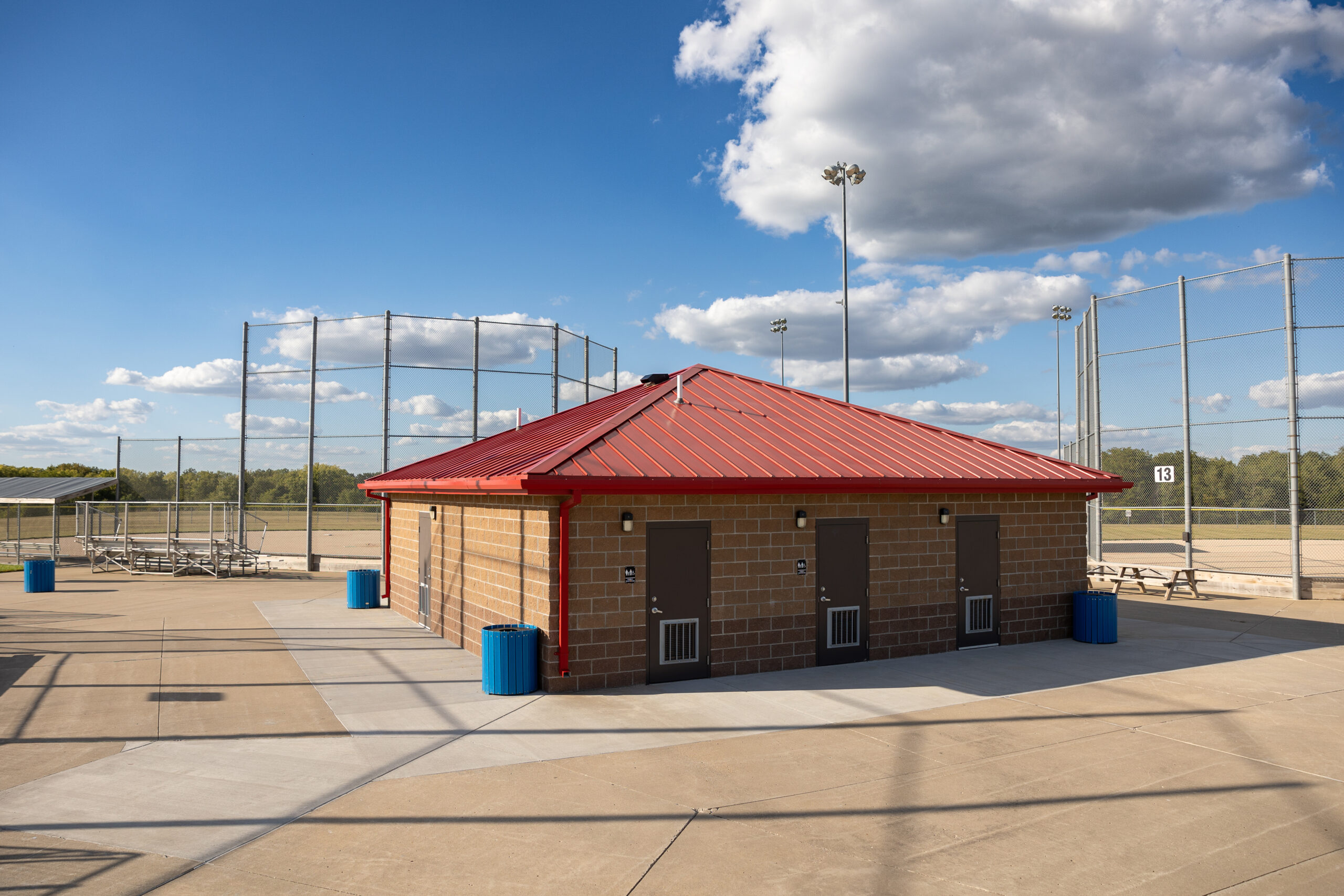
Image credit: romtec.com
These questions demonstrate that comparing renderings are not enough to select the best park design. Public architecture must survive the permitting process, bidding, construction and maintenance, and decades of use.
Design decisions can have a direct impact on operations
Think about something as simple as an exterior coating. It can impact the look but also the cleaning requirements, repairs costs, weather resistance, and how graffiti can be removed. Roof designs affect drainage and maintenance, as well as the appearance of the area. The interior layout can influence the accessibility of a park and the circulation of visitors cleaning, as well as the placement of fixtures.
Park restroom designers with experience should be aware of both design and operation.
Romtec cooperates closely with municipalities, contractors and other stakeholders to create bathrooms that are custom-designed instead of limiting projects to a limited selection of typical designs. Materials, shapes and colors can be matched to the surrounding environment.
The drawing needs to be transformed into the actual building
The concept might look great on screen, but it’s not feasible to build or even cost. The building code, ADA requirements and local licensed architectural review, as well as available components as well as structural requirements and construction costs are all factors to take into consideration.
Romtec provides support for projects through preliminary designs, estimates, bid drawings and specifications, as well as renderings, engineered designs and submittal documents. This support helps to take the concept of architecture from initial design through construction and procurement.
Owners should carefully consider the middle part of the construction project when evaluating the best builder for park restrooms. Missing specifications, unrealistic materials, and poor coordination can result in costly costs during the transition between the design phase and construction.
Infrastructure also includes public restrooms
It is easy to think of public restroom buildings as accessories to the larger park. They’re more of an infrastructure, not much else.
In a busy restroom, families, children and elderly people may be using it simultaneously as maintenance workers, tourists, maintenance crews or people with disabilities. Based on the nature of the project, the planners need to take into account ADA accessibility, durable surfaces and materials, air conditioning, utilities, vandal resistant components, energy efficiency, access to clean-up, and capacity for visitors.
A campground may have different requirements that a park within the city. A sports facility could experience intense traffic concentrated around events, whereas a neighborhood park could experience regular, but moderate usage. These differences will affect the building rather than being taken care of after construction.
Budgeting without defining everything out
Cost control in public construction is not a surprise However, it doesn’t mean that you need to remove every unique feature.
Designers can make better decisions by being aware of the real costs. A feature that has minimal value for operation can be changed into a stronger, more functional material, or a design element that will add value.
Romtec’s expertise in restrooms, pavilions, concessions, showers, shelters, and multipurpose facilities allow the conversations to happen even as design concepts are still flexible.
A well-designed bathroom in a park is successful because it’s seldom a problem for visitors. It’s easily accessible and well-designed. It is suitable for its surroundings, reliable and built to last. Its apparent simplicity hides the complexity of architectural, engineering planning, budgeting, and documentation.