Surface finishing is no longer a labor-intensive task and is now a highly precise process. In the world of manufacturing the present, the quality of coatings is directly correlated with the durability, resistance to corrosion, and perception. In order to meet the expectations of customers who require flawless finishes as well as increasing global standards, a lot of factories have embraced paint robots.
Modern paint machines offer programmable precision and a structured motion for applications that previously relied on the skill of the operator. Automating spray paths and angles and speed, removes many of the inconsistencies which lead to uneven film build-ups or over use. This leads to a coating process that is reliable and promotes First Time Quality.
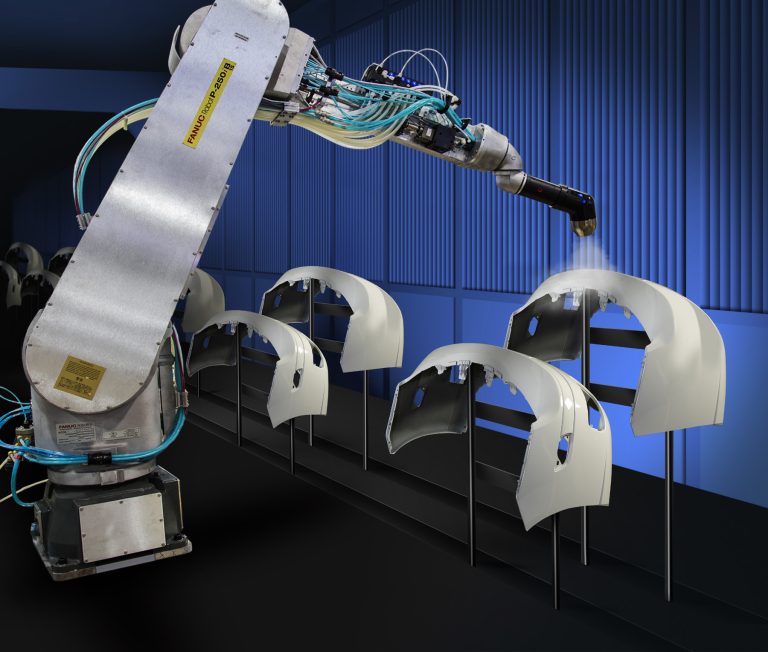
Image credit: automatedsolutions.com.au
Efficiency, consistency, and measurable gains
Due to fatigue, or just small variations in technique, hand painting can lead to variations in coverage and thickness. Paint robots eliminate that variation by repeating the same motion pattern through every cycle of production. This type of repetition guarantees an uniform surface finish and the best distribution of materials on each part.
The transfer performance of modern robotic paint systems is enhanced. Overspray is minimized by ensuring a specific distance between the applicator, and the part. This allows more coating to be applied to the desired surface. The reduction in material waste results in savings in costs while reducing emissions of volatile organic compounds aid in ensuring environmental compliance.
Integrated fluid handling within paint robotics ensures accurate mixing ratios for multi-component coatings. It eliminates any irregularities that could compromise the integrity of the finish. A flexible flow control, coupled with the ability to program parameters allow manufacturers to alter the patterns of atomisation and spraying without interrupting production.
Productivity and safe work environments
A robot painter’s adoption has the benefit of improved uptime. As opposed to manual processes, robot paint cells run continuously and with very little interruption. Once programmed, they provide consistent throughput without the need for breaks or constant monitoring.
Safety concerns are vital when dealing with solvent-based coatings and two-component paints. Paint that is atomized could create dangerous surroundings, particularly when working with substances which are explosive or reactant. Modern paint robots can operate safely in difficult situations. This decreases the chance of exposure to chemicals that are harmful and improves safety at work.
Conveyor track technology boosts productivity further, allowing paint applications by robots as the parts remain in motion. This technology lets you work on a wider area and helps to keep production lines running smoothly.
Australian Automation Expertise Supporting Industry
Access to automation partners who have experience is crucial for businesses that would like to modernize their finishing operations. In Australia, Automated Solutions has gained a reputation of delivering advanced robotic integration services. With an extensive understanding of automation engineering, the team operates as FANUC certified robot integrators who assist businesses with custom robotic paint solutions that work with their goals for operation.
Through a combination of technical expertise and actual industry experience, Automated Solutions assists manufacturers in evaluating their existing procedures and developing optimized robotic paint cells. Through collaborative planning, simulation, and system integration, facilities get an understanding of the expected performance gains prior to the installation.
The adoption of paint robots isn’t only an issue of automatization. It’s about making tangible improvement in quality, efficiency and security. A well-engineered system for painting transforms finishing on surfaces into a precise consistent, cost-effective, and repeatable operation. The support of automation specialists will help companies improve their competitiveness and assure the long-term development of a competitive market.